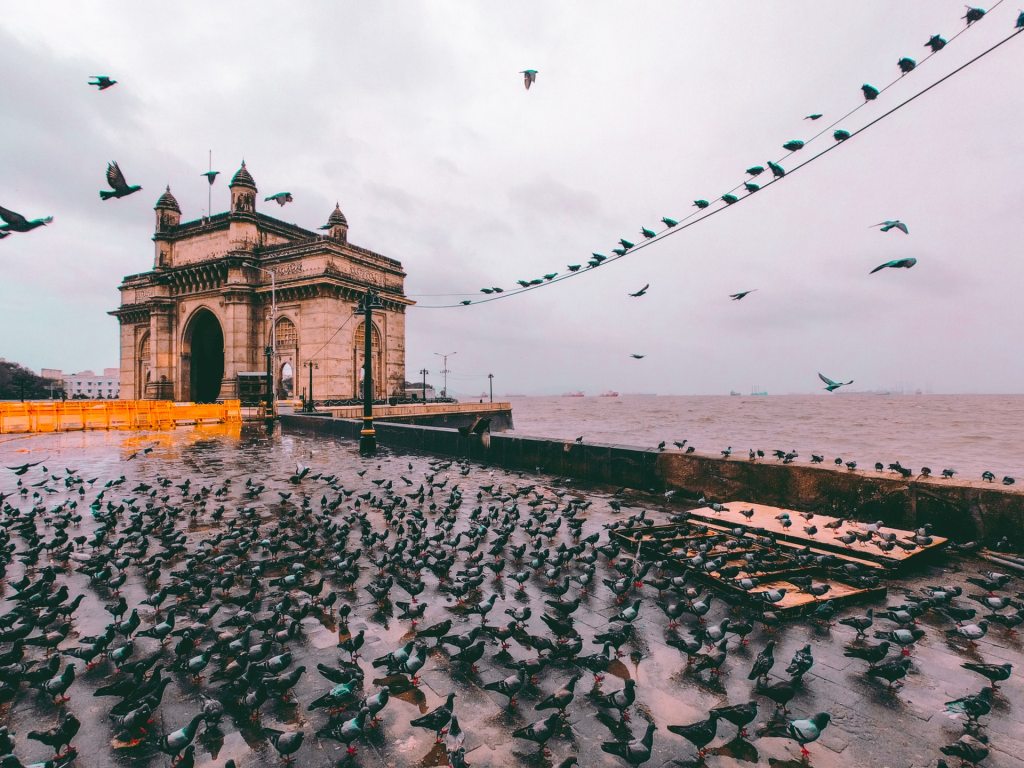
The Gateway of India is, without question, one of the most well known traveler hotspots of Mumbai. Sitting gladly on the Apollo Bunder, it disregards the Arabian Sea. It is one of the characterizing landmarks of the city of Mumbai and was worked in the year 1924. The development was embraced by the well known draftsman George Wittet, to honor the visit of King George V and Queen Mary to Mumbai. The impressive structure of the landmark is a delightful juncture of Indian, Arabic and Western engineering and has become a mainstream traveler center point in the city. It is additionally the beginning stage of various ship benefits that handle to the notable Elephanta Caves.
Nicknamed ‘Mumbai’s Taj Mahal’, the establishment of this milestone was laid in 1911 and it was introduced 13 years after the fact in 1924. The structure in itself is a made of yellow basalt and strong cement and is decorated with various Muslim and Hindu themes also. The basalt curve of the Gateway filled in as the passage and leave access to India through conduits before autonomy and was the leave point from where the last British ship left India for England. There are statues of Swami Vivekananda and Chhatrapati Shivaji that have been introduced close to the Gateway also. The view from the ocean of the Gateway complex, particularly around evening time is very ethereal and lovely. The Gateway of India is consequently, a notable relic as well for instance of sublime engineering in itself!
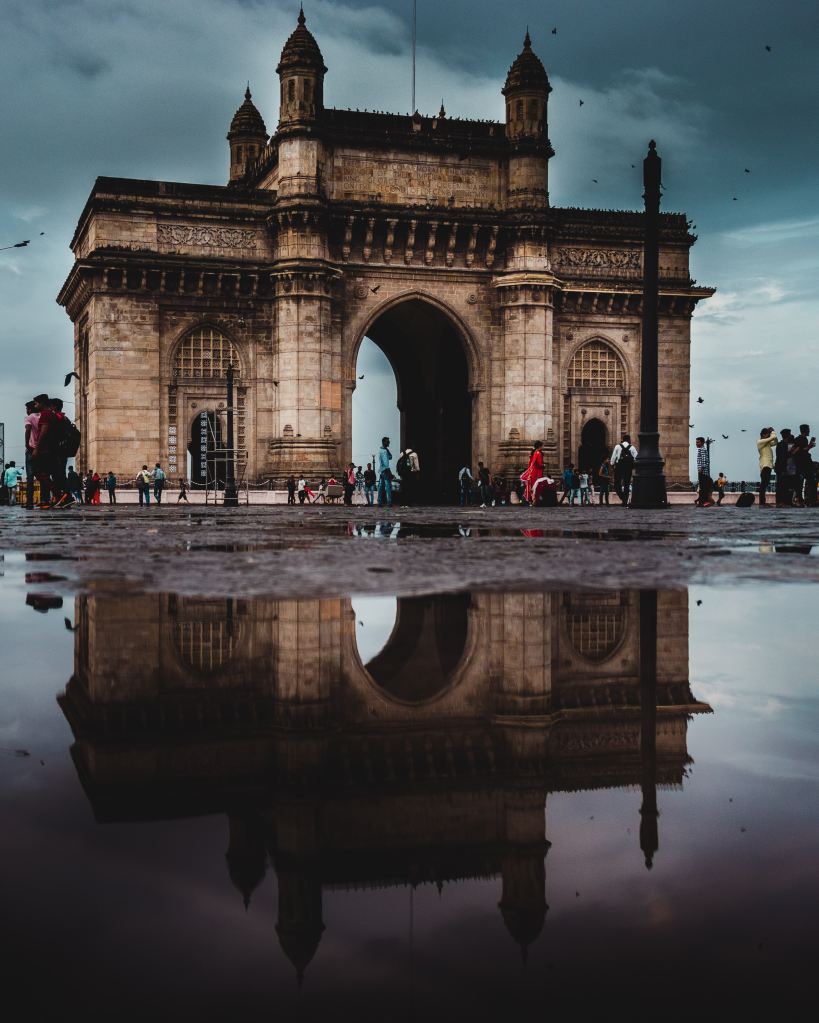
History of gateway of india
The land on which the Gateway presently stands once had a place with a wharf that was basically utilized by the angling network of the territory. Considering its to be as an arrival zone, it was redesigned to fill in as a wharf for British governors. Before sufficiently long, it was concluded that a stupendous passage will be worked here to invite King George V and Queen Mary to Mumbai, and the establishment of the equivalent was set down March 31, 1913, by the Governor of Bombay, Sir George Sydenham Clarke. In any case, the last plan of the Gateway was just endorsed on March 31, 1914, by George Wittet. The developments officially started in 1920 and it took very nearly four years to finish the development of the landmark. On 4 December 1924, the Gateway of India was introduced by the Viceroy, the Earl of Reading.
Design and Structure
Worked in Indo Saracenic style, the Gateway of India was structured by Scottish draftsman George Wittet. The structure is a mix of Hindu and Muslim building impacts alongside a Roman triumphal curve, which remains at a tallness of 26 meters. It is worked of yellow basalt and concrete and the stone was sourced locally. The curve is flanked by two huge lobbies that have the ability to suit upwards of 600 individuals. Then again, the focal vault of the entryway is motivated from Muslim design style and has a distance across of 48 feet with the pinnacle arriving at 83 feet. The passage additionally has fastidiously planned honeycomb structures which further help four towers that award an exceptional evenness to the exterior. Steps behind the passage give an extensive perspective on the Arabian Sea also
Ferry Timings
An exceptional encounter offered here at the Gateway is that of ship rides, through which you can appreciate the perspective on this landmark directly from the ocean. These vessel rides are short relaxation rides and take you on a journey of the considerable number of attractions close by. The principal vessel from here leaves at 9 a.m. what’s more, can cost anyplace between INR 55 to INR 110 for each head, with both the beginning and end point being the Gateway of India. Various ship rides to other well known attractions, for example, Elephanta caverns and Alibaug are likewise accessible:-
- Elephanta Caves
Flight of the principal vessel: 9:00 a.m. after which normal pontoons are accessible at regular intervals.
Flight of the last pontoon: 2.30 p.m.
Charges per head: INR 120.00 per individual, INR 10 extra for setting off to the highest point of the ship deck
- Alibaug
Various administrators give this administration and are definite as follows:-
I. PNP
Takeoff timings: 8:10, 10:10, 12:10, 14:10, 16:10, 18:30
Charges per head: INR 150
ii. Ajanta
Takeoff timings: 6:15, 7:15, 9:15, 10:00, 11:00, 12:30, 14:00, 15:00, 16:00, 17:00, 17:30
Charges per head: INR 85 (Main Deck)
iii. Maldar
Takeoff timings: 8:45, 11:45, 13:45, 15:45, 16:00
Charges per head: INR 135 (Main Deck), INR 135 (Upper Deck)
 traviliyaa