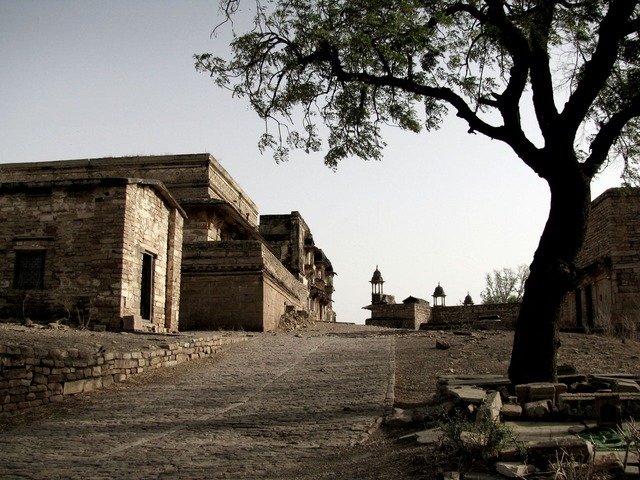
Alluded to as ‘the pearl among posts in India’ by Mughal head Babur, the Gwalior Fort is one of the most invulnerable strongholds situated in the whole northern and southern India and is a spot you certainly should visit. Arranged on the highest point of a tremendous rough mountain close Gwalior in Madhya Pradesh in focal India, this impressive structure overwhelms the whole city of Gwalior. An indistinguishable piece of the character and design of the city, proof recommends that it has been around since sixth Century. It is additionally the spots where the second most seasoned reference of the number ‘zero’ has been found as a cutting inside a sanctuary on the highest point of the post.
The development of the Gwalior Fort occurred in two sections, in two distinctive timeframes and hence, this design wonder has a captivating history appended to it. It has gone from the ownership of one administration to the next, on different occasions. The whole fortification complex is very much kept up and incorporates sanctuaries, water tanks and castles, for example, Man Mandir, the Gujari, the Jahangir, the Karan, and the Shah Jahan.
Light and Sound Show
The Gwalior Fort has a fantastic sound and light show each night. This show is amazingly top notch and makes you feel as though you are a piece of the rich history of the fortress and the romantic tale of Raja Man Singh and his sovereign Mrignayani.
The show happens in the amphitheater at the Man Mandir. The timings for the show are as per the following:
Hindi Show: 7:30 PM
English Show: 8:30 PM
Timing and entry fee
The Gwalior Fort is open on all days from 6:00 AM to 5:30 PM
The section expense for the stronghold is as per the following:
Indians: INR 75 for every individual
Outsiders: INR 250 for every individual
For youngsters: Free section for kids underneath 15 years old
Camera Fee: None
Best time to visit
The best time to visit the Gwalior Fort is during the fall and spring season, that is among October and March. One can likewise appreciate the visit during the hour of rainstorm when the encompassing is verdant green, and the air is new and fresh.
Architecture
Encompassed by solid dividers of sandstone, the Gwalior Fort encases three sanctuaries, six royal residences and a few water tanks, and is really a design wonder. The various castles and sanctuaries are an impression of the compositional luxury and aptitude that existed during those occasions and keeps on being acknowledged till date.
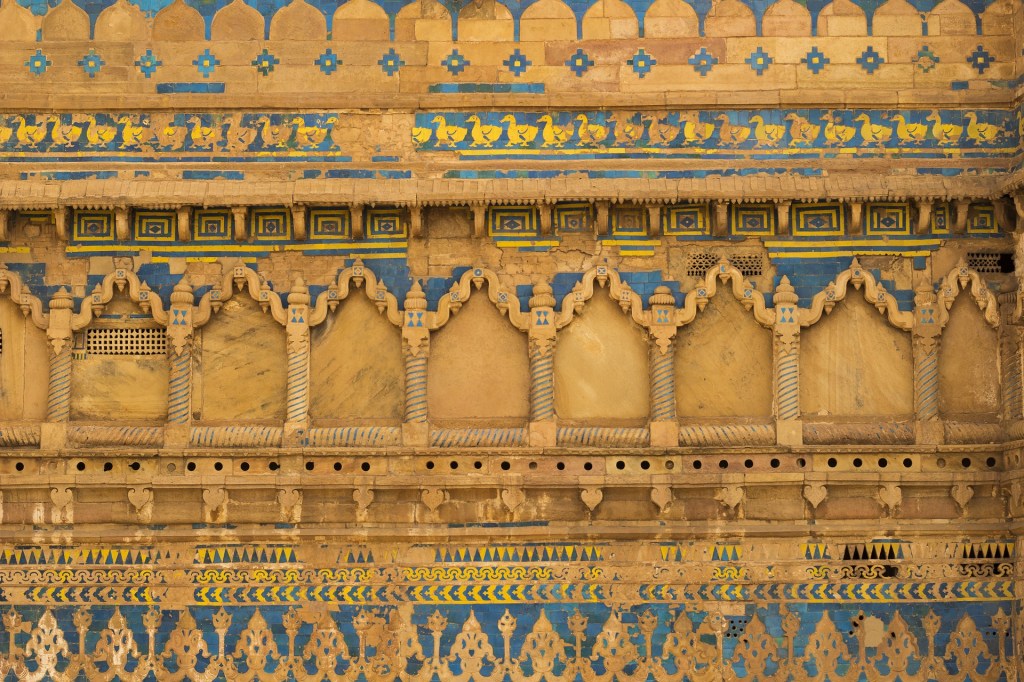
The most lovely spot in the whole premises is no uncertainty the Man Mandir Palace, which with its incredibly intricate structure, appears to hang at the edge of the striking fortification. Blue earthenware tiles structure the veneer of this amazingly delightful royal residence. The Teli-ka-Mandir, worked in the ninth century Dravidian style, ascends to a stature of more than 100 feet and is renowned for its mix of South Indian design with North Indian ornamental themes, just as a flawlessly etched outside. The Saas-Bahu sanctuaries on the eastern side of the stronghold are additionally overwhelming instances of the eleventh century sanctuary design.
 traviliyaa