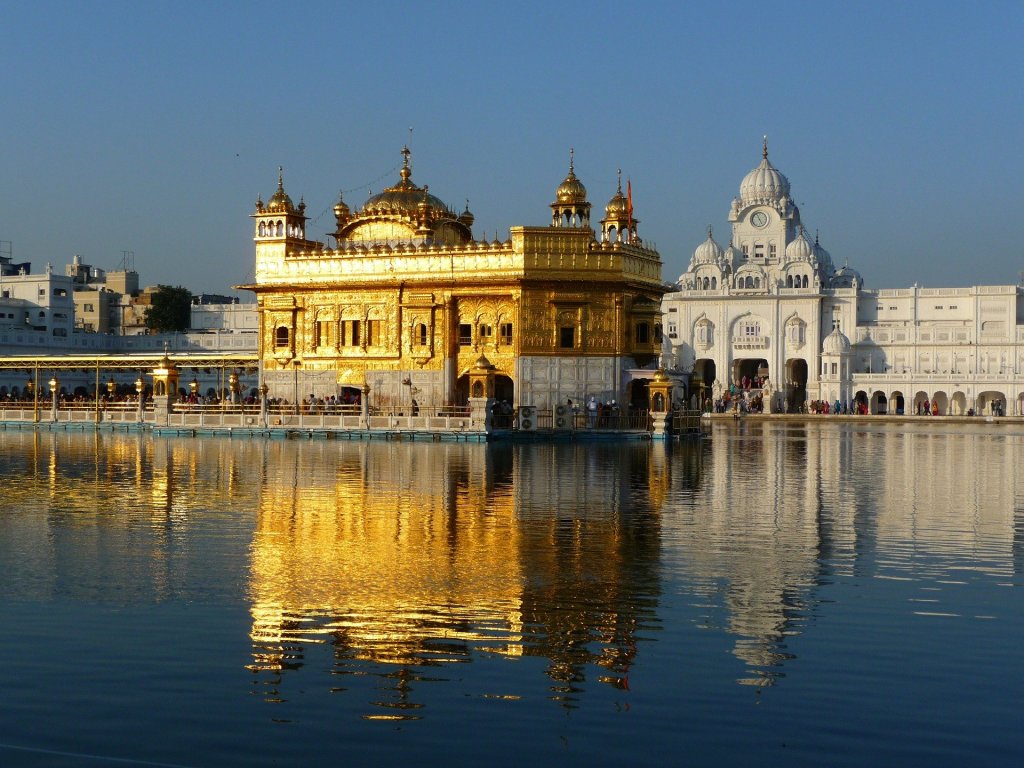
One of the most profound places in India, Golden Temple, otherwise called Sri Harmandir Sahib, is the holiest sanctums in Sikhism and is bursting at the seams with strict intensity and holiness. Its heavenliness is a thing that must be experienced and not portrayed. Subsequent to experiencing a wild time of tear-downs, it was modified by Maharaja Ranjit Singh in 1830 absolutely with marble and gold. It is the perspective on the shining holy place, shimmering in the focal point of the tank that brings a vast tranquility. It is found right in the core of Amritsar and is effectively reachable from any piece of the city. Filling in as an image of fellowship and uniformity, Golden Temple is visited by individuals from everywhere throughout the world who come here to look for otherworldly comfort and strict satisfaction. Disregarding the a huge number of individuals processing about in the premises of the sanctuary, the main voice you will hear around you is quietness sprinkled with serenades of the Sikh petitions.
Situated in the lovely city of Amritsar, Golden Temple is only a little piece of the huge complex known as Harmandir Sahib or Darbar Sahib to the Sikhs. The profound center is the tank, the Amrit Sarovar, which encompasses the shimmering focal hallowed place. Amritsar takes its name from this Amrit Sarovar which was unearthed in 1577 by the fourth Sikh master, Guru Ram Das.
Around the edge of the compound, there are more hallowed places and landmarks. The Sikh Museum is situated inside the principle entrance clock tower which shows the persecution suffered by the Sikhs on account of the Mughals, the British and the Indian Government of 1984. The Ramgarhia Bunga is a defensive post situated at the southeast finish of the tank and is encompassed by two Islamic-style minarets. Brilliant Temple is unquestionably one of the most impeccable attractions on the planet.
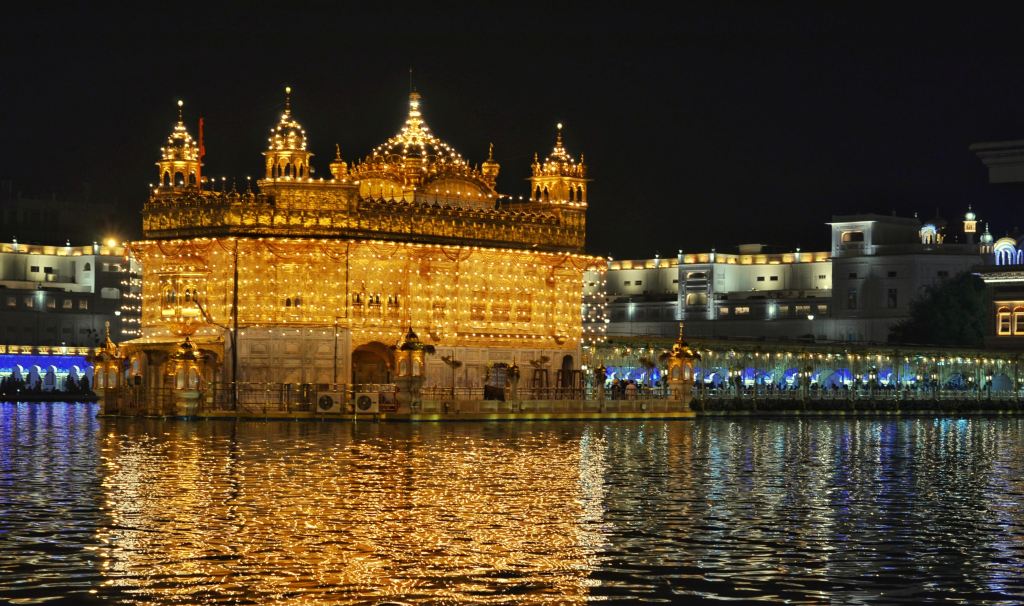
Architecture of Golden Temple
The Golden Temple is a hypnotizing mix of Hindu and Islamic design styles and has all the earmarks of being gliding toward the finish of a long highway. It has a rich marble lower level decorated with creature and blossom themes in pietra dura work, which is likewise observed on the Taj Mahal. Over this is the sparkling second level, encompassed in unpredictably cut gold boards, beat by a 750 kg gold overlaid vault. The glimmering inward sanctum sees the clerics and the artists constantly reciting the Guru Granth Sahib, heaping on to the effectively exceptional strict climate. In the wake of paying regard, travelers for the most part retreat to the subsequent floor, which has the complicatedly painted exhibition. The Hari Mandir (focal sanctuary) is associated with the pathway by a marble thoroughfare which is known as Guru’s Bridge. This way symbolizes the adventure of the spirit in the afterlife. Grasped by marble stairways, this tank is accepted to have recuperating powers that can fix numerous maladies.
Celebrations at Golden Temple
One of the most significant celebrations celebrated at the Golden Temple is Vaisakhi in the second seven day stretch of April (generally the thirteenth April). This celebration is commended to recognize the establishing of the Khalsa. Different celebrations saw with extraordinary strict devotion are the birthday of Sikh author Guru Nanak, the birth commemoration of Guru Ram Das, affliction day of Guru Teg Bahadur, and so on. The Harmandir Sahib is splendidly enlightened with lights and diyas on Diwali alongside the firecrackers show. The sanctuary is visited by most Sikhs at any rate once during their lifetime.
Structures inside
- Akal Takht and Teja Singh Samundri Hall: Akal Takht, signifying “The position of royalty of the Timeless (God)” stands directly before the principle sanctum. Built up by Guru Hargobind after his dad Guru Arjan, the spot came to be known for its stately, otherworldly just as mainstream undertakings. While the Akal Takht in the complex of the Golden Temple is the essential seat and boss authority of Sikhism, there are 4 more Takhts spread crosswise over Anandpur, Patna, Nanded and Talwandi Sabo, which are all significant journey destinations for Sikhism.
- Clock Tower: While the clock tower didn’t exist in the first development of the sanctuary, the Clock Tower worked by the British stands in the spot of the “lost royal residence”. In the Second Anglo-Sikh War, the British obliterated a piece of the structure and included a clock tower. Structured by John Gordon, the Clock Tower was worked in the year 1874 yet was later wrecked by the Sikhs, after 70 years. Directly, there is another passage to the sanctuary which has a clock to its north and a gallery on its first floor, yet individuals still allude to it as ghanta ghar deori.
- Ber Trees: Originally, the complex of the Golden Temple was open and housed various trees around the pool. Presently, the sanctuary premises has a two story patio with four passages and 3 Ber (jujube) trees. The first is known as the Ber Baba Buddha and is situated to one side of the ghanta ghar deori. The tree gets its name from Baba Buddha who sat under this tree while administering the development of the principal sanctuary and the pool. The subsequent tree called the Laachi Ber is accepted to be the tree under which Guru Arjan took rest while the development of the sanctuary was occurring. The third tree, Dukh Bhanjani Bher is situated over the pool, on the opposite side of the sanctum. As per the Sikh custom, a Sikh was relieved of his uncleanliness after he took a dunk in the waters of the sanctuary pool, giving the tree the name of “enduring remover”. There is a little gurudwara under this tree.
- Sikh History Museums: The principle ghanta ghar deori houses a Sikh exhibition hall on its first floor which shows the different artworks of the Gurus just as the saints. Things, for example, swords, kartar, brushes, chakkars put away in the exhibition hall delineate the Sikh history in the entirety of its greatness.
visiting tips
- Take off your shoes and socks before entering the sanctuary compound (there is shoe remain at the passageway). Wash your feet in the shallow foot showers found close by.
- Dress suitably. The body must be completely secured, and you have to cover your head which is an indication of regard in the gurudwara. Scarves can be obtained for nothing out of pocket or purchased from the vendors who sell trinket scarves for INR 10. Be that as it may, it is reasonable to convey a scarf with you.
- Tobacco and liquor are carefully precluded.
- On the off chance that you wish to sit next to the tank, sit leg over leg and don’t plunge your feet in the water.
- Photography is allowed close to the walkway encompassing the tank yet not inside the Golden Temple itself.
- While tuning in to Gurbani, sit on the ground in the Darbar Sahib as an indication of respect.
 traviliyaa