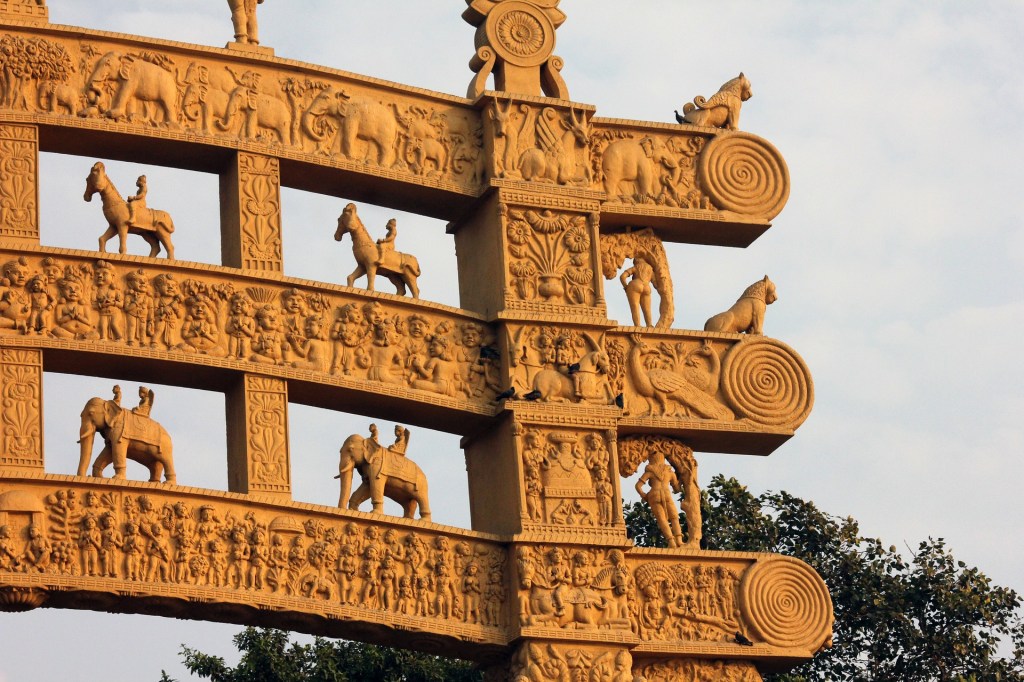
Situated in Madhya Pradesh, the Buddhist landmarks of Sanchi are one of the most established stone structures in India. Assigned a World Heritage site by UNESCO, the Great Stupa was introduced in the third century BC by Emperor Ashoka of the Mauryan administration. The figures and landmarks present at the site are a fine case of the improvement of Buddhist craftsmanship and design. The stupa sits on a slope in Sanchi, 46 km from the city of Bhopal.
Sanchi is known for its old Stupas, religious communities, the Ashoka Pillar, Toranas or luxurious passages with many-sided carvings and different leftovers of the rich Buddhist culture which go back to the third century B. C. It is one of the most significant spots for Buddhist journey and pioneers from around the globe visit this spot.
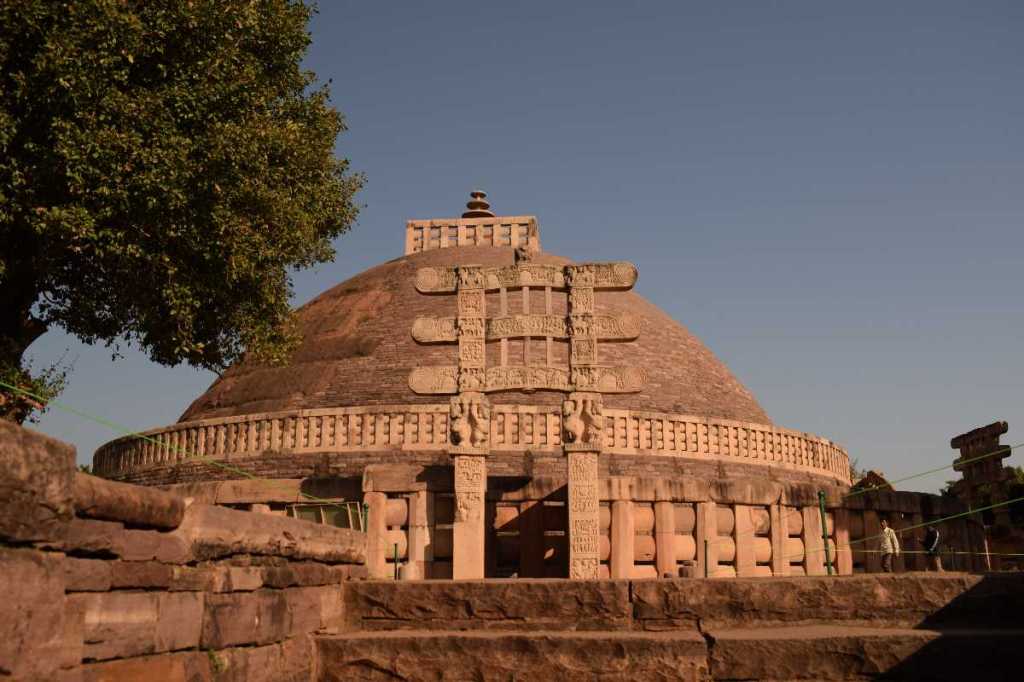
This huge hemispherical vault, in excess of 50 ft high with a width of more than 30m was built to respect Lord Buddha and houses numerous significant Buddhist relics. It is intended to fill in as a sacrosanct internment hill for the disseminated stays of Lord Buddha.
Architecture
The first structure was a low structure of block, a large portion of the width of the present landmark. Head Ashoka’s partner started from the neighboring town of Vidisha, and the lovely slope was hugely charming to him. Workers were procured from Vidisha to build this superb structure.
Each stupa has three principal highlights:
The Anda, or the consecrated hemispherical hill inside which lies the hallowed survives from Lord Buddha. The Anda in the Sanchi Stupa has a strong center and can’t be entered. Inside the Anda lie the genuine relics of Lord Buddha.
The Square railing or harmika arranged in the middle denotes the hallowed entombment site.
The Chattra or the huge hemispherical umbrella-like structure that covers the internment site finishes this heavenly structure. The Great Stupa has 3 roundabout umbrella plates, agent of the three gems, or Triantha of Buddhism. These chattras are supproted by a huge focal column.
Notwithstanding these principal structures, the Sanchi Stupa has extra highlights that add to its greatness. Master Buddha has been emblematically spoken to using the figures like positions of royalty, haggles among others, a remarkable portrayal of the organizer of Buddhism. There are four unpredictably embellished doors in the four cardinal ways, joined by a balustrade divider that encases the whole landmark. Different plans and themes are cut on the railing and the entryways of the Stupa. A sandstone column, engraved with Schism Edict by Ashoka can be found at the site. A resplendent winding from the Gupta time frame, with Brahmi characters looking like conch shells, alluded to as ‘Shankhalipi’ or ‘shell-content’, was later introduced at the area.
Being around for a few centuries, this interesting structure has stood the assaults of time and war that have influenced the land. The stone packaging, patio with a twofold trip of steps, balustrades, a processional way, an umbrella and railing, all worked of sandstone, were included the second century BC. The stone encasing holds the first block establishment of the landmark. The first carvings of the structures portray the life of Buddha, which have been mixed well with carvings of the different old style times of India. The lion, an indication of Buddha, is cut into different areas. The general design is intended to speak to the different principles of the Buddhist confidence, with every one of the carvings portraying their own story.
Land of Stupas
Sanchi is a little town arranged in the lower regions close Bhopal, the capital of the territory of Madhya Pradesh. This town is incredibly well known for being the site of incalculable Stupas, which house the relics of Lord Buddha. Given the prevalence of this verifiable marvel from the Mauryan Empire, it is astonishing to take note of that Sanchi was not visited by Lord Buddha once. Sanchi Stupa, worked in the Greco-Buddhist style, toward the finish of third century B.C., is presently an eminent UNESCO World Heritage Site. Additionally, there is likewise Ashoka Pillar, aside from the Great Bowl, which merits visiting. So in case you’re into Mauryan history, remember to visit this site, in any event, for once.
Entry Fee
Indian residents, guests of SAARC and BIMSTEC countries (Bangladesh, Nepal, Bhutan, Sri Lanka, Pakistan, Maldives, Afghanistan, Thailand, Myanmar) is INR 30 Foreigners (other): INR 500 Free for kids as long as 15 years old.
timings 8:30 AM – 5:30 PM
Best time to visit
The best time to visit Sanchi is during the winters, from November to March, as the temperature can be very high during the summers. You can likewise visit Sanchi during the storm season, be that as it may, it may be somewhat hard to get around the city on the off chance that it is pouring excessively hard.
Restaurants and food
Sanchi doesn’t have too many expound eating spots or luxuries that stick out. Be that as it may, the town fosters an unpretentious assortment and the couple of eating joints accessible here offer not too bad North Indian, South Indian, Chinese and Continental dishes. The nearby delights of Madhya Pradesh that you may risk upon here incorporate Dal Bafla, Biryani, Kebabs, Korma, Poha, Rogan Josh, Jalebi, Ladoos just as drinks like Lassi and Sugarcane Juice
 traviliyaa